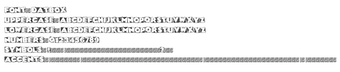
Dat Box, by Dat Box, is a display font that gives headings a rigid, geometric identity for techno projects. It supplies bold, block-shaped characters for use in titles, logos, and interface labels so designers can create a pixel-inspired or industrial look across creative projects. Uniform stroke weight, boxy character architecture, and vector outlines preserve clarity at display sizes. It suits graphic designers, digital artists, and hobbyists creating visual assets.
What does Dat Box offer for themed headlines?
Dat Box is aimed at short-form typographic uses where a strong visual signal matters, such as promotional banners, game UI labels, and logo marks. The face anchors compositions that need a mechanical, technology-forward tone rather than naturalistic text. In practice it performs as a display voice for headings and interface captions, not as a neutral body-text substitute, so choose it when a bold, engineered aesthetic is the design goal.
How much control does the font give designers over typographic styling?
The font itself provides a fixed set of letterforms, leaving scale, kerning, and tracking to the host application. Dat Box often uses a unicase or stylized lowercase approach, so lowercase behaviour can match the uppercase geometry rather than traditional forms; that may limit readable continuous text. Designers can still refine spacing and case handling inside layout tools, but the face does not expose alternate artistic variants beyond its base glyph set.
Does Dat Box affect system performance or file compatibility?
Dat Box is distributed as standard font packages, which register with the OS and the text engines of desktop applications. The vector outlines maintain edge crispness when scaled, so large-format headings keep clean rasterisation. As a font resource it does not run as a persistent background process; rendering work is performed by the operating system and the application, so it does not introduce ongoing CPU or RAM overhead by itself.
Is Dat Box straightforward to install and license-aware?
Installation follows the usual Windows pattern: right-click the .ttf or .otf file and select Install to make the face available in application font lists. The typeface is optimised for use in word processors, design suites, and video editors. Licensing varies by distribution; the package includes a license file and notes that commercial embedding may require a separate agreement, so confirm terms before publishing commercial work.
A focused choice for display-oriented, themed projects
Dat Box is a specialised option for designers seeking a strict, engineered headline voice across themed assets. Check the included license before embedding the face in commercial deliverables and run layout samples at intended sizes to confirm legibility. Best applied to titles, logos, and short UI labels, it fits projects that need a distinctive, mechanical typographic identity rather than continuous body text.
Pros
Bold, square-based architecture creates a distinct display voice
Uniform stroke weight preserves consistent visual density in headings
Vector outlines keep edges sharp when scaled for large titles
Cons
Unicase or stylized lowercase limits conventional body-text use
Character set focuses on standard alphanumerics, not extended glyphs
Commercial embedding may require separate license verification
Laws concerning the use of this software vary from country to country. We do not encourage or condone the use of this program if it is in violation of these laws. Softonic may receive a referral fee if you click or buy any of the products featured here.